Vendor Fragmentation
You are working with multiple vendors (one for SEO, one for paid media, one for content), and the results are not adding up
If your marketing channels are working separately, they are missing the chance to support each other. You can either coordinate them or let them compete for the same budget. Olio MaXimus creates integrated marketing services for B2B companies, making sure each channel supports the others and helps move qualified buyers forward.

Most industrial companies keep marketing channels separate, each with distinct budgets, teams, and metrics.
You might have one vendor handling SEO, another running paid media, and content being scheduled without considering campaign timing. Videos may go unused, and your website might not have been updated in years. This leads to fragmented efforts that waste your budget and confuse buyers.
We focus on coordinated efforts. When SEO and paid campaigns target the same keywords, they work together.
A coordinated approach brings together SEO, paid media, content, video, and web design so each one supports the others.
Olio MaXimus is one integrated marketing agency for B2B manufacturing and engineering services companies. We coordinate all channels into one system. Not separate campaigns. One strategy across all channels, each one amplifying the others.

This service is for senior leaders — Managing Directors, CMOs, Business Heads, and Marketing Directors — at industrial manufacturers and engineering firms who see themselves in one or more of these situations:
Most companies we work with are not short on marketing activity. They usually have solid SEO, active paid media, good content production, and technical skills. The real issue is not the quality of each channel, but the lack of coordination between them.
B2B integrated marketing solutions for industrial businesses require orchestration. When SEO and paid strategies target different keywords, you are competing with yourself. When content is produced without a connection to demand-generation timing, you create assets that never reach the right audience. When the website is not designed around buyer-journey stages, you waste the traffic SEO and paid media generate.
We don't see integrated marketing as a group of separate services. It's a coordinated system where every channel is built to support the others and guide buyers through a clear journey.
Leadership teams we speak with across industrial sectors often describe versions of the same coordination gap:
“We are producing content, but it is not being seen or engaged with because it is not promoted through paid channels or optimised for search.”
CONTENT VISIBILITY“Our SEO is strong, but conversion is low because the website experience does not match buyer expectations set by our paid campaigns.”
EXPERIENCE GAP“We have great video content but no systematic way to distribute it or tie it into our demand generation strategy.”
VIDEO IN ISOLATION“Paid campaigns drive traffic, but our landing pages are not optimized for the audience segments we are targeting.”
LANDING CONVERSION“We have multiple vendors working on different channels, but they are not aligned on messaging, timing, or buyer journey stages.”
VENDOR ALIGNMENT“Marketing budget is fragmented across channels, and there is no clear visibility into how investments in one channel support performance in another.”
BUDGET FRAGMENTATIONBehind these symptoms are structural gaps that individual channel optimisation cannot fix. When we work with industrial clients, we consistently find the same root causes:
SEO and paid media bid on different keywords. Content calendars do not align with campaign timing. Budget is wasted on overlapping efforts rather than reinforcing one another.
Different vendors emphasise different value propositions. Paid stresses ROI while organic stresses technical capability. Buyers receive conflicting messages instead of building confidence.
Channels operate independently at different stages. Top-of-funnel content is not connected to mid-funnel nurturing. Visitors land on pages misaligned with their journey stage.
Design is outdated and not built around buyer-journey stages. Traffic generated by SEO and paid does not convert because landing pages are misaligned with campaign messaging.
Video assets exist but are not distributed through paid channels or integrated into sales conversations. Content is produced on editorial schedules, not coordinated with demand timing.
Marketing spend is allocated based on historical patterns rather than actual pipeline contribution. No visibility into which channels are actually moving buyers forward.
If manufacturers don't use end-to-end marketing services that work as an integrated system, the risks can add up quickly:
At Olio MaXimus, we start integrated marketing execution with a single strategic framework. Before we optimise any channel, create any asset, or allocate budget, we answer three key questions:
What is the complete buyer journey from initial research through purchase, and what content, messaging, and channel experience does each stage require?
How do organic search, paid media, content, video, and website design need to work together to move a buyer through that journey efficiently?
Which channels amplify each other, and how do we sequence execution so that investment in one channel increases the effectiveness of another?
We don't answer these questions just once. We revisit them regularly as buyer behaviour, competition, and channel performance change. This approach creates omnichannel marketing for industrial companies that builds momentum instead of causing fragmentation.
A short walkthrough of our integrated operating model — how SEO, paid, content, video, and web run as one coordinated system instead of six independent vendors.

Our integrated marketing services for B2B companies cover six coordinated areas. Each area delivers specific results and is designed to support the others.
Industrial SEO architecture to align buyer intent, technical visibility, conversion pathways, and long-cycle search behaviour.
Explore This Service
AI-search optimisation to improve visibility across generative engines, featured answers, knowledge panels, and conversational discovery.
Explore This Service
Technical content strategy that translates complex industrial expertise into trust-building buyer education and demand-acceleration assets.
Explore This Service
Meticulously planned paid campaigns that target high-intent industrial buyers for lead conversions, coordinated with organic strategy.
Explore This Service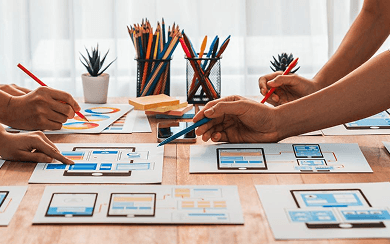
Buyer-centric digital experiences designed to improve engagement, conversion progression, usability, and long-cycle decision support.
Explore This Service
Industrial video storytelling that strengthens technical credibility, buyer understanding, sales enablement, and multi-channel engagement.
Explore This ServiceOlio MaXimus, the integrated marketing agency for manufacturing and engineering services companies, does not operate in isolation. It is the primary execution engine of the overall growth system, and it works most effectively when the strategic and demand layers above it are aligned.
With both in place, every execution decision has direction and purpose.

Integrated execution brings the strategic blueprint to life across all channels. Strategy defines priorities; execution ensures every channel reinforces them.
Integrated marketing provides the coordinated channels through which demand campaigns activate. Paid media, content, SEO, and web design all work together to reach target buyers.
Integrated marketing produces coordinated messaging, technical content, and proof materials that sales teams use to close conversations. Website, video, and case studies are aligned to support the sales process.
Integrated marketing success doesn't happen in a straight line. Results build over time as channels start working together and make each other more effective.
Here is what our clients typically experience across the program timeline:
Short-Term Signals
Medium-Term Momentum
Long-Term Compounding Growth
We share results only where we can speak precisely to the strategic intervention that drove them.
Case Study 1
The website was outdated and not optimized for conversion. SEO efforts targeted generic keywords. Paid media drove traffic, but landing pages were not aligned with campaign messaging. Video and content existed but were not integrated into demand generation. Sales cycles were long, and the sales team lacked proper enablement materials.
We rebuilt the website architecture around buyer journey stages. Realigned SEO strategy to target high-intent keywords and buyer research behaviors. Optimized paid media landing pages for specific audience segments. Produced and integrated case study videos into sales conversations. Created content assets addressing specific stakeholder concerns (engineering, procurement, finance), and aligned all messaging across channels.
Organic search traffic increased 150%. Paid campaign conversion rates improved 40%. Sales cycles shortened 25%. The sales team reported a 60% reduction in time spent on buyer education due to aligned enablement materials.
Case Study 2
Strong technical capability but weak market visibility. Competitors with inferior products had stronger online presence. Marketing channels were managed separately with different messaging and no strategic alignment. No video content. The website did not effectively communicate technical advantages.
We developed an integrated positioning strategy. Built technical content addressing specific engineering concerns. Produced technical storytelling videos. Optimized SEO around differentiating keywords. Launched coordinated paid media emphasizing unique capabilities. Redesigned website to highlight proof points and technical differentiation.
Search visibility increased 200% for high-intent keywords. Brand perception shifted from local provider to premium specialist. Win rate against named competitors increased from 30% to 65%. Cost per qualified meeting decreased by 35% due to improved efficiency in the organic channel.
Case Study 3
Multiple vendors manage different channels without coordination. The budget was being wasted on overlapping efforts. Messaging was inconsistent across channels. No clear customer journey or handoff between awareness and conversion activities. The website was not supporting sales.
We consolidated channel management into integrated execution. Mapped customer journey and defined how each channel would support specific stages. Developed consistent messaging across SEO, paid, content, and website. Redesigned website to improve conversion and buyer-journey progression. Integrated video into paid campaigns and sales enablement.
Marketing ROI improved 180% by eliminating channel redundancy and improving efficiency. Sales team productivity increased 40% with aligned messaging and support materials. Pipeline quality improved as buyer journey optimization reduced dead ends and increased progression through evaluation stages.

Get a channel audit showing where integration gaps exist and what coordinated execution could unlock.
Request A Paid Integrated Marketing AuditIn some cases, yes. However, integrated marketing execution requires alignment across all channels on strategy, messaging, and performance metrics. If existing vendors are optimizing independently, we cannot guarantee integration effectiveness. The first conversation will clarify whether existing relationships can be integrated or whether consolidation is necessary for success.
If you recognise the coordination gaps described here, the best next step is to have a conversation, not just request a proposal.
In a 30-minute discovery call, we will:
Free 30-Minute Consultation on How to Boost Sales Qualified Leads through Organic Growth and Digital Ads
Understand your current marketing mix, how channels are performing independently, and where integration gaps exist
Share an initial perspective on which channels have the highest leverage for your business and how they could work together more effectively
Be direct about whether integrated execution is the right approach for your current situation and objectives
If there is a fit, outline the logical first step — whether that is a full audit, a strategic alignment session, or a full-service engagement
Explore experience-based insights on our approach to lead growth, long sales cycles, and industrial buyer behaviour across real-world scenarios.


